About History Sledge Taxis Fun Facts Types Routes Tips FAQ
🚕
🇵🇹 Madeira Island, Portugal

Your Complete Guide to Taxis in Madeira

Discover the rich history, fascinating facts, and practical tips about the taxi services that keep the Pearl of the Atlantic moving.

Taxis on the Island of Madeira

An essential part of island life and tourism since the early 20th century

Getting Around Paradise

Madeira Island, a subtropical paradise in the Atlantic Ocean, relies heavily on its taxi network to connect visitors and locals across its dramatic volcanic terrain. With winding mountain roads, steep coastal cliffs, and villages perched at dizzying heights, taxis have become the lifeblood of transportation on this Portuguese archipelago.

Taxi drivers in Madeira are known for their remarkable driving skill, navigating hairpin turns with ease while sharing stories about the island's history and hidden gems. Many visitors consider their taxi ride one of the most memorable parts of their Madeira experience.

The island's taxi fleet serves the main island of Madeira as well as connections to key locations such as Funchal, the capital, Monte, Curral das Freiras, Cabo Girao, and the stunning northern coast. Whether heading to a levada walk or a scenic viewpoint, a Madeira taxi can get you there.

1,500+ Licensed Taxis
741 km² Island Area Covered
100+ Years of Service
1.4M Annual Tourists Served

A Century of Taxis in Madeira

From horse-drawn carriages to modern fleets, the evolution of Madeiran taxis mirrors the island's own journey into modernity

1850s

The Wicker Sledge Era

Madeira's first "taxis" weren't cars at all - they were the legendary "carros de cesto," wicker basket sledges that carried passengers down the steep streets from Monte to Funchal. Guided by two "carreiros" in traditional white clothing and straw hats, these sledges could reach speeds of 48 km/h using only greased wooden runners on cobblestone roads.

Early 1900s

Horse-Drawn Carriages

Before the automobile revolution reached the island, horse-drawn carriages served as the primary means of hired transport in Funchal. The wealthy tourists who visited Madeira - including royalty and aristocrats from across Europe - relied on these elegant carriages to travel between their seaside hotels and the island's botanical gardens.

1920s-1930s

The First Motor Taxis

The first automobiles arrived in Madeira in the early 1900s, and by the 1920s, motorized taxi services began to emerge in Funchal. These early taxis were a luxury, serving primarily wealthy tourists and the local elite. The narrow, steep roads made driving a genuine adventure, and only the bravest drivers dared navigate the mountain routes.

1950s-1960s

Tourism Boom & Fleet Growth

As Madeira grew as a tourist destination, the taxi fleet expanded significantly. The construction of new roads connecting Funchal to northern villages like Santana and Sao Vicente opened new routes for taxi drivers. This era saw the establishment of formal taxi ranks at key locations including Funchal's main square and the Santa Catarina park area.

1970s-1980s

Regulation & the Yellow Taxi

The regional government introduced standardized regulations for taxi services. The iconic yellow taxi became the standard for city taxis in Funchal, while black taxis with a blue stripe were designated for inter-city and island-wide service. Metered fares were introduced, bringing transparency and fairness to pricing.

2000s

The Modern Road Network

The construction of the Via Rapida expressway and modern tunnels revolutionized taxi travel across the island. Journeys that once took hours through winding mountain passes could now be completed in minutes. Taxi drivers gained access to previously remote areas, making the entire island accessible to visitors.

2010s-Present

Digital Age & Sustainability

Modern Madeira taxis have embraced technology with GPS systems, card payment terminals, and booking apps. The fleet is gradually transitioning to include hybrid and electric vehicles, reflecting the island's commitment to sustainability. Despite modernization, taxi drivers maintain the warm, personal service that Madeira is famous for.

The Carros de Cesto

Madeira's most famous "taxis" - the legendary wicker basket sledges of Monte

🛷
The Monte Toboggan Run - Since 1850

The World's Most Unusual Taxi Ride

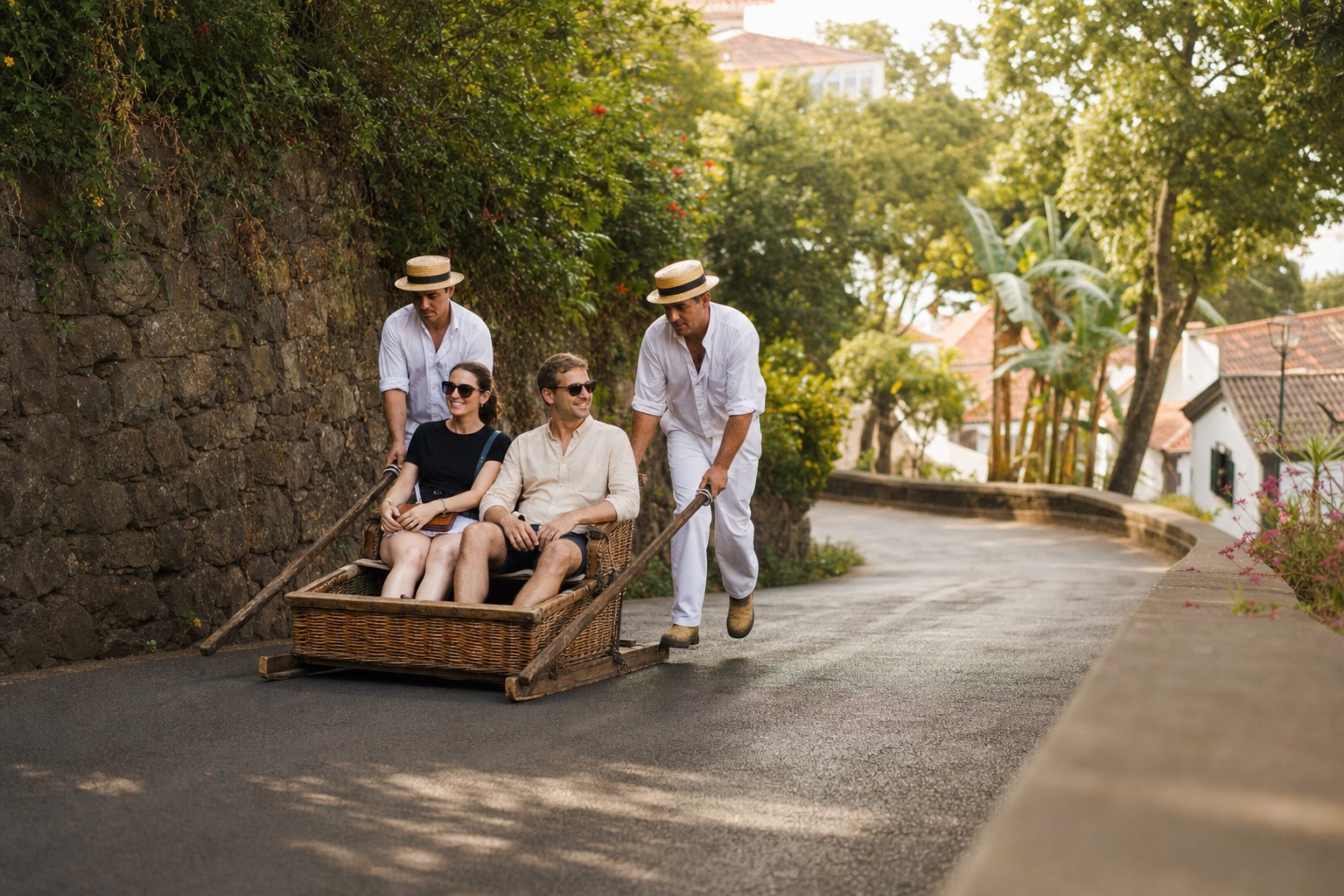
Long before modern taxis, Madeirans invented an ingeniously simple form of downhill transport. The "carro de cesto" is a wicker basket sledge mounted on wooden runners, designed to slide down the steep cobblestone streets from the hilltop parish of Monte to the Livramento neighborhood below - a journey of about 2 kilometers.

Two "carreiros" (drivers) dressed in traditional white linen clothing and straw hats steer the sledge using ropes, while using their rubber-soled boots as brakes on the slippery basalt cobblestones. The ride reaches speeds of up to 48 km/h and takes about 10 minutes.

"The experience is like nothing else on Earth - part thrill ride, part living history, and entirely unforgettable. Ernest Hemingway reportedly called it 'one of the most exhilarating experiences of his life.'"

Things You Didn't Know About Madeira Taxis

Surprising and delightful facts that make Madeira's taxi culture truly unique

🛷

The Original "Taxis"

Before cars, Madeira's first form of taxi service was the "carro de cesto" - a wicker basket sledge that slides down the steep streets from Monte to Funchal at up to 48 km/h, steered by two men in white using only their rubber-soled boots as brakes!

🏔

Highest Taxi Routes in Portugal

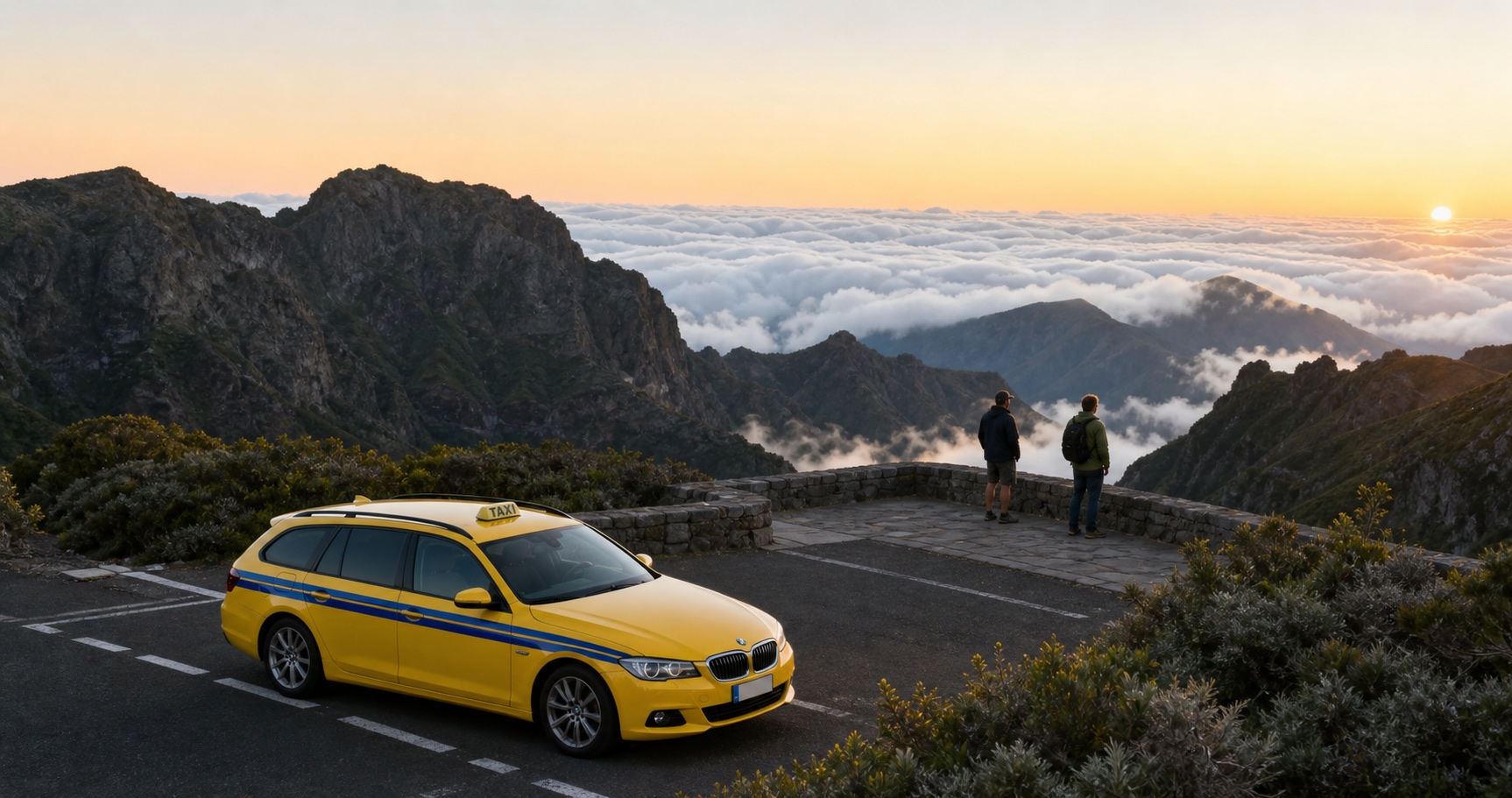
Madeira taxis regularly climb to Pico do Arieiro at 1,818 meters above sea level, making these some of the highest-altitude taxi routes in all of Portugal. The temperature can drop 15 degrees from Funchal at sea level.

💬

Multilingual Drivers

Many Madeira taxi drivers speak 3-4 languages fluently, including Portuguese, English, German, and French. Years of serving international tourists have made them some of the most linguistically talented cabbies in Europe.

🌊

Cliff-Edge Roads

Some taxi routes in Madeira run along cliffs that drop hundreds of meters to the ocean. The route to Cabo Girao passes the highest sea cliff in Europe at 580 meters. The old roads to Paul do Mar once had no guardrails at all.

🚗

Two Colors, Two Rules

Madeira has two distinct taxi types: yellow taxis operate within city limits with metered fares, while black taxis (with a blue stripe) handle inter-city routes with pre-set prices. Hailing the wrong color for your destination is a classic tourist mix-up!

🎉

New Year's Eve Rush

During Madeira's world-famous New Year's Eve fireworks display, taxi demand skyrockets by 500%. Funchal's harbor area becomes a massive celebration with over 600,000 fireworks, and taxis work around the clock to transport the crowds.

181 Tunnels to Navigate

Madeira has over 181 road tunnels carved through its volcanic mountains. Taxi drivers must memorize an incredible network of tunnels, some stretching over 3 km long, that connect the south coast to the remote northern villages.

🍌

Tour Guides in Disguise

Many taxi drivers double as unofficial tour guides, offering half-day and full-day island tours. They know secret viewpoints, the best poncha bars, and hidden restaurants that no guidebook will tell you about.

🛣

The Steepest Streets

Funchal has some of the steepest urban streets in Europe, with gradients exceeding 25%. Taxi drivers climb these daily without breaking a sweat. The streets around Monte Church are particularly hair-raising.

Cruise Ship Days

When large cruise ships dock in Funchal, up to 5,000 passengers arrive simultaneously. The entire taxi fleet mobilizes for "cruise days," and taxi ranks at the port extend for hundreds of meters. Some drivers earn a significant portion of their income on these days alone.

🎶

Fado on the Radio

Don't be surprised if your taxi driver has traditional Portuguese Fado music playing. Many drivers are passionate about music and some even sing along during the ride. A few have been known to play ukulele (cavaquinho) during breaks at the taxi rank.

🥒

The Poncha Stop

Experienced taxi drivers on full-day tours always know the best spot to stop for poncha, Madeira's famous cocktail made from aguardente (sugar cane rum), honey, and lemon. Each driver has their own "secret" favorite bar.

Know Your Madeira Taxi

Different taxis for different needs - here's how to pick the right one

🚕

Yellow Taxi (Cidade)

The classic city taxi. Yellow with a rooftop sign, these operate within Funchal and other municipal areas. They use a taximeter, so you pay by distance and time. Perfect for getting around town, short hops to restaurants, or trips from the cruise terminal.

🚘

Black Taxi (Interurbano)

Distinguished by their black body and blue stripe, these taxis handle routes between municipalities. They work with pre-agreed fares or official price tables. Ideal for airport transfers, day trips across the island, and reaching remote levada trails.

🚐

Taxi Van (Minibus)

For groups of 5-8 passengers, taxi vans offer comfortable transport with extra luggage space. Common for airport transfers for families, group tours, and transporting hikers with gear to trailheads. Available in both yellow and black categories.

Most Requested Taxi Journeys

Common routes with approximate fares and travel times to help you plan

Airport to Funchal Center ~20 min
Cristiano Ronaldo International Airport to Funchal hotel zone via Via Rapida expressway
~€25-30
Funchal to Monte ~15 min
Climb to Monte Palace Gardens, Monte Church, and the toboggan ride starting point
~€10-15
Funchal to Cabo Girao ~25 min
Visit Europe's highest sea cliff (580m) with its famous glass skywalk overlooking the Atlantic
~€30-40
Funchal to Curral das Freiras ~30 min
Journey to the "Valley of the Nuns," a hidden village in a volcanic crater surrounded by dramatic peaks
~€35-45
Funchal to Pico do Arieiro ~45 min
Ascend to Madeira's third-highest peak at 1,818m for breathtaking views above the clouds
~€50-65
Full-Day Island Tour ~6-8 hrs
Custom tour covering multiple highlights: Santana, Sao Vicente, Porto Moniz natural pools, and more
~€150-200

Tips for Taking Taxis in Madeira

Everything you need to know for a smooth taxi experience on the island

1

Agree on Fares in Advance

For inter-city trips with black taxis, always agree on the fare before departure. Ask to see the official price table if available. For yellow city taxis, make sure the meter is running from the start of your journey.

2

Cash is Still King

While more taxis now accept cards, many drivers still prefer cash, especially for shorter rides. Keep euros in small denominations handy. ATMs are widely available in Funchal and at the airport.

3

Book Airport Transfers Ahead

Pre-booking airport transfers is highly recommended, especially during peak season (April-October) and around holidays. This ensures you have a taxi waiting when you land and avoids the queue.

4

Tipping Etiquette

Tipping is not mandatory in Madeira but is always appreciated. Rounding up to the nearest euro for short rides or adding 5-10% for longer journeys and island tours is customary.

5

Use Official Taxi Ranks

In Funchal, you'll find official taxi ranks at key locations: the airport, the cruise terminal, Praca do Municipio, Avenida do Mar, and near the Mercado dos Lavradores. Taxis at ranks are always licensed and regulated.

6

Consider a Taxi Tour

For the best island experience, hire a taxi for a half-day or full-day tour. Drivers know the best spots, can customize the route, and will wait while you explore. It's often more flexible and personal than a bus tour.

Frequently Asked Questions

Quick answers to common questions about taxis in Madeira

A taxi from Cristiano Ronaldo International Airport to central Funchal typically costs between €25-30 and takes about 20 minutes. Prices may be slightly higher at night (after 9 PM) or on weekends and holidays due to surcharges. Pre-booking can sometimes get you a better rate.
Uber and Bolt have been available in Madeira, though coverage can be limited compared to mainland Portugal, especially outside Funchal. Traditional taxis remain the most reliable option across the island, particularly for reaching remote areas and mountain viewpoints.
Yellow taxis operate within municipal boundaries (like inside Funchal) and always use a taximeter. Black taxis with a blue stripe are licensed for inter-municipal routes (between cities/towns) and work with pre-agreed fares or official price tables. For trips outside the city, you'll need a black taxi.
Yes! Full-day taxi tours are one of the most popular ways to explore Madeira. A typical 6-8 hour tour costs €150-200 and can be customized to your interests. Popular circuits include the east tour (Santana, Faial), the west tour (Cabo Girao, Ribeira Brava, Paul do Mar), and the mountain tour (Pico do Arieiro, Curral das Freiras). Your hotel concierge can arrange one, or ask at any taxi rank.
Most taxi drivers in Funchal and tourist areas speak basic to good English. Many also speak German and French due to the large number of tourists from those countries. For more remote areas, having your destination written down or using a maps app to show the location can be helpful.
Yes, there are regulated surcharges. Luggage placed in the trunk typically incurs a small extra charge (around €1.50 per piece). Night rides (9 PM - 6 AM) and rides on weekends/holidays may have a 20% surcharge on the meter fare. These extras are regulated and should be clearly communicated.
The Monte toboggan ride (carro de cesto) is a must-do experience! It starts near Monte Church and slides about 2km downhill to Livramento. The ride costs around €30 per person (2 passengers per sledge) and takes about 10 minutes. It operates daily except on some holidays and in heavy rain. Many visitors take a taxi up to Monte and ride the toboggan back down.